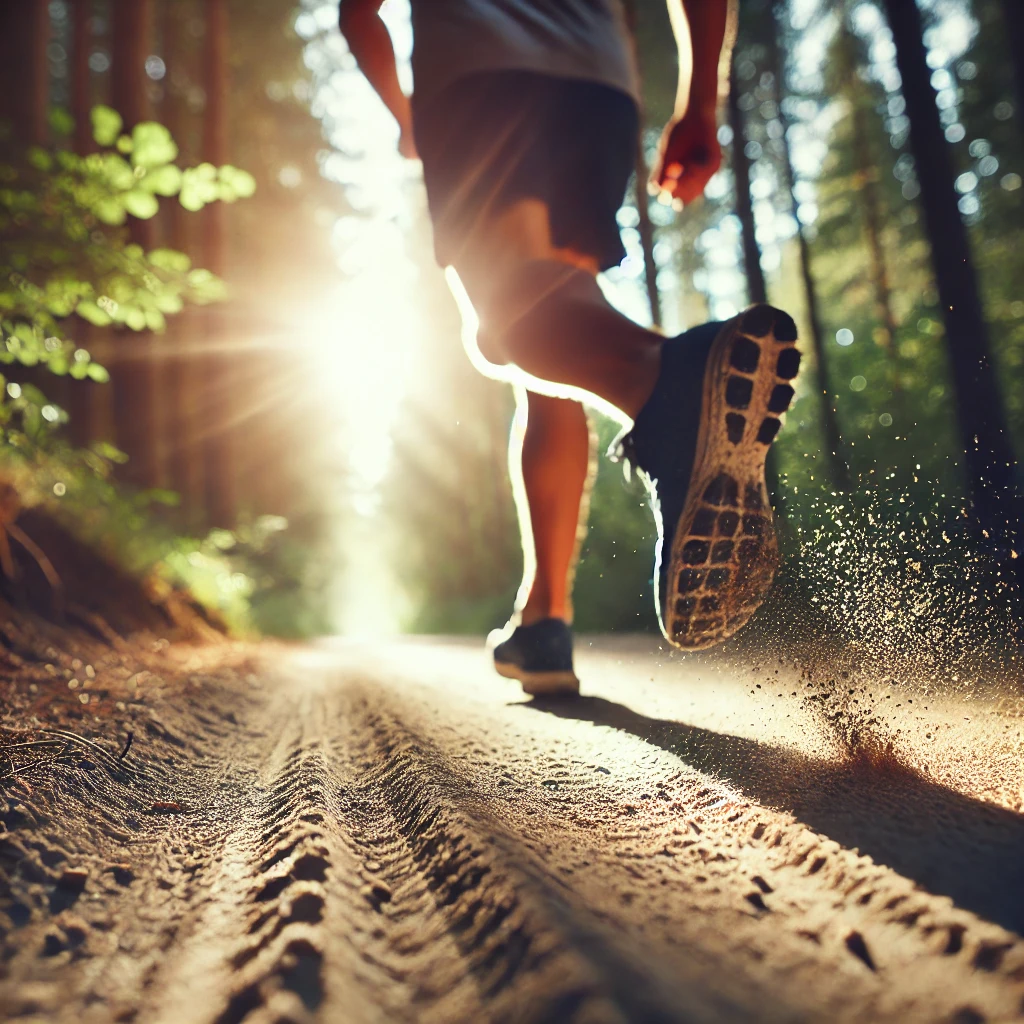
Have you ever been so absorbed in an activity that the world around you seemed to melt away? Hours felt like minutes, and every action felt effortless and natural. This is the flow state – a mental condition where you’re fully immersed in the present moment, operating at your best. Psychologist Mihaly Csikszentmihalyi first described flow as a state of focused engagement where distractions fade and clarity takes over.
For me, flow often finds its way into long training runs, bike rides, or deep, thoughtful projects. There’s a moment when the rhythm of my footsteps syncs with my breathing, and everything else falls away. It’s a meditative space, balanced between purposeful thought and mental drift. Running demands attention – it keeps me tethered to the present while letting my mind explore freely. This delicate balance is what makes flow so transformative.
What is flow?
Flow is more than focus; it’s a state where action and awareness merge. You’re fully present, yet distractions fade to the background. Whether hiking a twisting trail, working on an intense project, or lost in a creative pursuit, flow offers ease even in the face of challenges.
The essence of flow lies in its paradox: an intense focus on the task at hand combined with a detachment from external concerns. I’ve felt it while hiking in the wilderness, the rhythm of my steps carrying me so deeply into the moment that I wandered far off course. It’s a curious blend of precision and freedom, where time warps and self-consciousness fades.
Key traits of flow include:
• Effortless engagement: Actions feel automatic yet intentional.
• Distorted time: Hours can pass in a blur – or stretch endlessly.
• Balance of challenge and skill: Tasks are just hard enough to stretch you but not so overwhelming they cause frustration.
Why does flow matter?
Flow isn’t just a pleasant experience – it has real benefits that can transform both work and life.
• Boosts productivity: Being ‘in the zone’ helps you work more efficiently and effectively.
• Enhances creativity: Flow encourages unexpected connections and fresh insights, something I’ve relied on in systems thinking to bridge abstract ideas into practical solutions.
• Reduces stress: Focusing on the present quiets worries about the past or future.
• Fosters happiness: Flow is intrinsically rewarding, offering deep satisfaction in the act itself.
When you’re in flow, you’re not just doing something – you’re fully being in it.
How to invite flow into your life
Flow isn’t something you can force, but you can create the conditions for it to emerge:
• Choose the right activity. Flow thrives in tasks that challenge your abilities without overwhelming them and that hold personal meaning. It’s easier to immerse yourself in something you care about.
• Set clear goals. Structure helps, but flexibility is key – flow often arises when you adapt to the moment.
• Minimise distractions. Create a space where interruptions are less likely, whether that’s silencing your phone, using noise-cancelling headphones, or finding a quiet environment.
• Pay attention to feedback. Flow often involves real-time cues that keep you connected, like the cadence of steps during a run or incremental progress on a project.
Flow and systems thinking
Flow and systems thinking share a quiet harmony. Both thrive on balance – whether between challenge and skill or between individual parts and the larger whole. Systems thinking often requires you to immerse yourself deeply in complexity, uncovering patterns and interconnections that aren’t immediately obvious. Flow, with its capacity to focus and engage, can make those insights feel intuitive.
I’ve experienced this while working on intricate systems projects, where the rhythm of thought and action aligns perfectly. It’s in these moments of flow that the layers of a system begin to reveal themselves – interdependencies, boundaries, and opportunities for change.
Flow as a way of life
Flow isn’t just a state of mind; it’s a way of being. It’s about valuing the journey over the destination, finding joy in the process rather than fixating on the outcome. Whether cycling long distances, solving an obtuse problem, or simply walking through the woods, flow transforms the ordinary into the extraordinary.
So, think about the activities where you’ve felt flow – those moments when the world faded and time warped. How might you invite that state back into your life? Whether it’s through a creative pursuit, a project, or a long walk, let yourself get lost in the rhythm.
Sometimes, to truly find yourself, you need to lose yourself first.
 K Shel Blogs